Serving Cary, Cornelius & Pittsboro | Virtual Across NC
Animal Assisted Play Therapy® (AAPT) integrates animals into play therapy in purposeful, developmentally appropriate ways. Rather than simply having an animal present during therapy, the animal becomes part of the therapeutic process while the child and teens are given opportunities to communicate, explore emotions, build skills, and develop confidence through play.
At Krippa Family Psychological & Wellness Services, Kristin Krippa incorporates principles of Animal Assisted Play Therapy® into her work with children and teens when appropriate for the child's needs, comfort, and treatment goals.

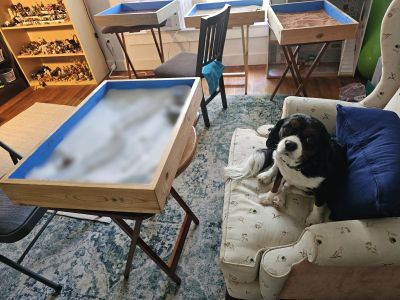
Animal Assisted Play Therapy® (AAPT) is an approach that integrates appropriately selected animals into the therapeutic process through play. The interaction between the client, therapist, and animal is purposeful and connected to the client's individual treatment needs and goals.
AAPT is different from simply having a therapy animal present in the room. Animals may participate in therapeutic games, imaginative play, skill-building activities, movement, or other experiences that provide opportunities for emotional expression, problem-solving, relationship building, and learning.
An important principle of Animal Assisted Play Therapy® is that the experience should be positive and respectful for both the client and the animal. Animals are not treated as therapeutic tools; their comfort, preferences, and willingness to participate are considered throughout the process.

Animal Assisted Play Therapy® can be incorporated into treatment for a variety of emotional, behavioral, developmental, and relationship concerns. Because play provides a natural way for children and teens to communicate and learn, involving an animal can create additional opportunities for engagement, connection, and practicing new skills.
AAPT may be helpful for children and teens experiencing:
Anxiety, fears, and worries
Difficulty regulating emotions
ADHD and impulse-control difficulties
Low self-confidence or self-esteem
Social skills and relationship difficulties
Grief and loss
Trauma or stressful experiences
Anger, frustration, or behavioral concerns
Difficulty trusting or connecting with others
Resistance to or discomfort with traditional talk therapy
The role of the animal is individualized rather than prescribed. Activities are selected based on the child's needs and treatment goals, and participation with the animal is never required.
Animals can interact with children in ways that feel natural, immediate, and less dependent on words. Their responses can create opportunities for children and teens to recognize emotions, practice communication, experience boundaries, solve problems, and develop confidence within the therapy session.
For example, a child who has difficulty recognizing another person's boundaries may begin to notice when an animal wants more space. A child who becomes easily frustrated may practice patience and flexibility while engaging the animal in an activity. A child who struggles with confidence may experience success while teaching an animal a skill or completing an activity together.
Animals can also provide a calming and engaging presence for children who are anxious, hesitant about therapy, or uncomfortable with direct conversation. The focus remains on the child's individual treatment goals, with interactions involving the animal incorporated when they can meaningfully support those goals.
Animal Assisted Play Therapy® does not mean that every session follows the same set of activities. The way an animal is incorporated depends on the child or teen, their treatment goals, and what is happening therapeutically during the session.
A session might include playing a game with the animal, teaching or practicing a skill together, creating an obstacle course, engaging in imaginative play, taking a walk, or incorporating the animal into other therapeutic activities. At other times, the animal may simply choose to be nearby while the child engages in play or talks with the therapist.
Children and teens are never required to interact with the animal. Some may want significant interaction, while others prefer occasional contact or simply enjoy having the animal nearby. The animal also has a choice about whether and how to participate.
The goal is not the activity itself. Each interaction provides opportunities to work toward individualized therapeutic goals while allowing play, relationships, and the natural behavior of the animal to become part of the therapeutic process.
Copyright © 2021 Kristin A. Krippa, M.A., - All Rights Reserved. COUNSELING, PSYCHOLOGICAL ASSESSMENT, Psychological Evaluations, Group therapy CHILDREN, TEENS, ADULTS, ATTACHMENT PARENTING, DEPRESSION, ANXIETY, RELATIONSHIPS, STRESS, PARENTING CONSULTS, CARY, NC
COUNSELING THERAPY SERVICES
BEHAVIOR THERAPY
Group therapy Teen group therapy Adolescent Group therapy Groups for Depression group therapy for anxiety.
Ms Kristin Krippa is listed at AllTherapist.com
IOP Intensive Outpatient for teens Apex NC, Triangle, Teen IOP
<meta name="google-site-verification" content="6_8bJxuNciRuCex0Knyr-dd-P_NCwzIO2Z7ZINSa7yE" />